
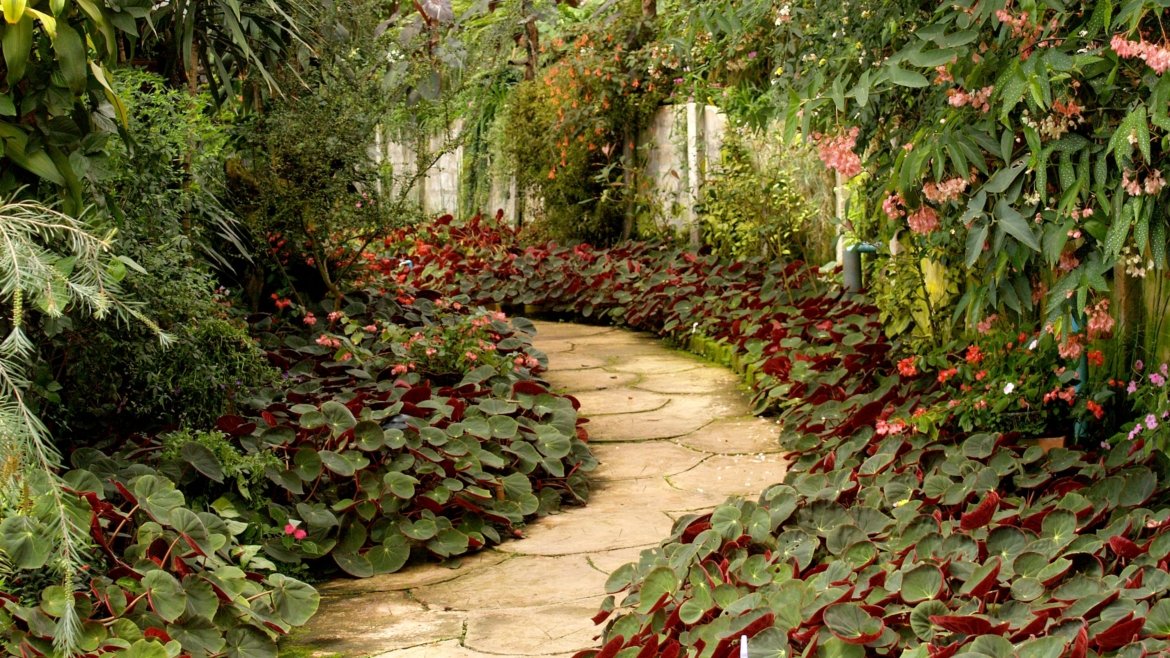
A well-designed garden isn’t just about looks — it has to work across all four seasons, withstand the Costa Brava’s Mediterranean climate, and not become a maintenance burden. At Jardinería Palamós we’ve spent years designing gardens in the area, and certain patterns keep showing up in the projects that age best. Here are the principles we apply.
Think in four seasons, not just summer
Many designs are planned around how they’ll look in July alone. The problem is that a garden built only for summer often looks bare or neglected the rest of the year. The solution is combining:
- Evergreen species that provide year-round structure (box, laurel, olive, rosemary).
- Staggered flowering zones, so something is always in bloom: bulbs in spring, lavender and bougainvillea in summer, shrubs like privet in autumn.
- Non-plant elements (stone, wood, lighting) that add interest while plants are dormant, especially in winter.
Zone the garden around how you’ll actually use it
One of the most common design mistakes is treating the garden as a single space instead of dividing it by function. Before planting anything, it’s worth defining clear zones:
- A dining and lounging area near the house, with natural or artificial shade for the hottest hours.
- A play or walkway area, with paving or lawn tough enough for heavy use.
- A decorative zone, where a more delicate design works because it doesn’t get foot traffic.
- A kitchen garden area, if the owner wants to grow edible plants.
Designing the zones first and choosing plants afterwards avoids the most common mistake: buying beautiful plants that don’t actually suit how the space will be used.
Plants that thrive in the Costa Brava climate
Not every plant that looks lovely in a catalogue can handle a Mediterranean summer, with months of dry heat and often chalky soil. Some options that do well in the area:
- Lavender, rosemary and sage — fragrant, drought-tolerant and eye-catching in bloom.
- Olive and almond trees, as medium-sized trees that provide shade without needing constant watering once established.
- Bougainvillea and jasmine, for walls and pergolas, with abundant flowers and low upkeep.
- Oleander, very hardy, though it’s worth noting it’s toxic if you have young children or small pets at home.
Lawn is no longer the only option
Natural grass is still a valid choice for heavily used areas, but it demands regular watering, mowing and feeding. In projects where low maintenance is a priority — very common among owners with a second home in the area — we increasingly recommend combining natural grass in lounging areas with artificial turf in decorative or walkway zones: it cuts maintenance without losing that year-round green look.
Light the garden so it can be enjoyed at night too
A well-lit garden gets used for many more hours of the day, especially in summer, when temperatures drop and being outside in the evening becomes appealing again. Key points: warm light (never cold, which feels uninviting outdoors), path lighting for safety, and the odd spotlight on a tree or feature to add visual depth to the whole space.
Good garden design combines looks, function and low maintenance — and that’s planned from the first sketch, not improvised along the way. If you’d like to renovate your garden or design one from scratch, at Jardinería Palamós we’ll help you get it right from the start. Request a free quote and we’ll go through it together.