
If you own a second home on the Costa Brava, you probably know the problem: you leave for a couple of weeks and, when you get back, the garden is dry, yellowing or simply dead. The Mediterranean climate is generous with sunshine, but unforgiving to any plant that doesn’t get water consistently — and nobody wants to spend their holiday holding a hose instead of relaxing on the beach.
The answer isn’t watering more, it’s watering smarter. A well-designed automatic irrigation system keeps your garden looking immaculate whether you’re there or not, and it also cuts water use compared with manual watering — increasingly important in an area like Girona, where drought restrictions have become more common in recent summers.
Why automatic irrigation is essential on the Costa Brava
The way a holiday home in Palamós, Calonge or Sant Antoni is used is very different from a full-time residence: whole weeks empty, followed by intense stays in summer — exactly when the garden needs the most water. Without an automatic system, the outcome is almost always the same: scorched lawn, wilted plants and a first impression of the house that doesn’t do justice to the rest of the property.
An automatic irrigation system solves this at the root:
- It waters at the optimal times (early morning or dusk), avoiding midday evaporation.
- It distributes water evenly, with no waterlogged patches or dry spots.
- It keeps working even when you’re not at the house.
- It adapts to each area of the garden: a lawn doesn’t need the same watering as a bed of Mediterranean plants or a hedge.
Types of irrigation systems for your garden
Not every garden needs the same system. It’s common to combine several, depending on the area:
- Drip irrigation. Ideal for flower beds, hedges, trees and Mediterranean plants. Water reaches the root drop by drop, with minimal waste and healthier plant growth.
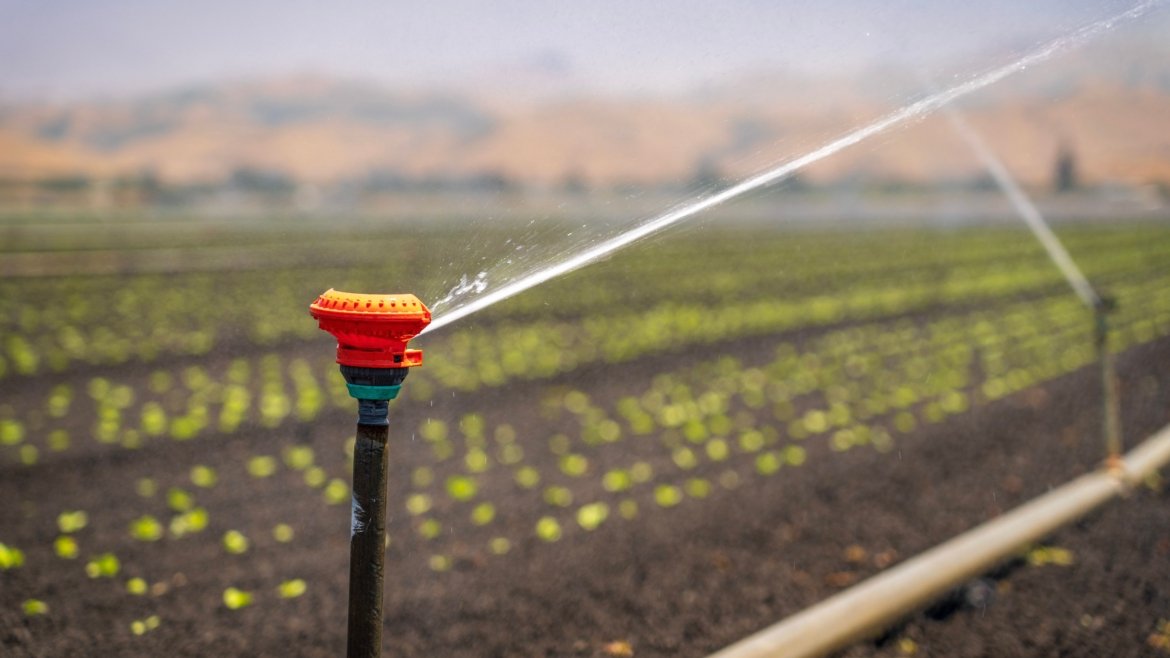
- Sprinkler irrigation. Best suited to natural lawn areas, where you need to cover a large surface evenly.
- Micro-spray irrigation. Useful for small or irregularly shaped areas, such as planters or borders, where traditional sprinklers don’t fit well.
The key is designing the system by zones, so that each area receives exactly the amount of water it needs — no more, no less.
Smart irrigation: controllers and moisture sensors
This is where the real water savings show up. Today’s controllers go far beyond simply setting a fixed watering time:
- Rain sensor controllers, which automatically cancel watering if it has rained, avoiding wasted water.
- Soil moisture sensors, which only trigger watering when the soil actually needs it.
- Wi-Fi connected controllers, which let you control and adjust irrigation from your phone — very useful if you spend long periods away from the Costa Brava and want to check or change the watering schedule remotely.
This combination is what makes the difference between a garden that uses water “because it’s watering day” and a garden that uses exactly the water it needs.
Maintaining the irrigation system
An automatic irrigation system isn’t a case of “install and forget”. Like any installation, it needs periodic checks: clogged drippers, misaligned sprinklers, controllers that need reprogramming for the season. That’s why folding irrigation into a full garden maintenance service is the simplest way to make sure the system keeps working well all year round, without you having to keep an eye on it yourself.
Irrigation and garden design: plan it in from the start
If you’re thinking about renovating or creating a new garden, automatic irrigation should be part of the project from day one, not added afterwards. Planning the garden design and the irrigation system together makes it possible to hide the pipework, choose plants according to their real water needs, and size the system accurately — something far harder (and more expensive) to do later on.
One thing many owners don’t factor in: if you also choose artificial turf for part of the garden, that area stops needing irrigation altogether, which further reduces the property’s overall water use — an increasingly common combination in Costa Brava gardens.
Quick tips if your holiday home doesn’t have automatic irrigation yet
While you decide whether to make the switch, here are a few basic tips:
- Group plants by their water needs (keep drought-tolerant species separate from those that need frequent watering).
- Use mulch or pine bark on flower beds: it noticeably reduces evaporation.
- If you have to water by hand, always do it early in the morning or after sunset.
- Prioritise Mediterranean plants adapted to the local climate — they need far less water than imported species.
A perfect garden, whether you’re there or not
Automatic irrigation isn’t a luxury — it’s the tool that lets you enjoy a well-kept garden on the Costa Brava without having to be physically present to water it. It saves water, saves time and avoids that sinking feeling when you arrive at the house after several weeks away.
At Jardinería Palamós we design and install irrigation systems tailored to each garden, whether it’s a new build or an upgrade to an existing one. If you’d like to know which system best suits your garden, get in touch and we’ll prepare a no-obligation quote.