
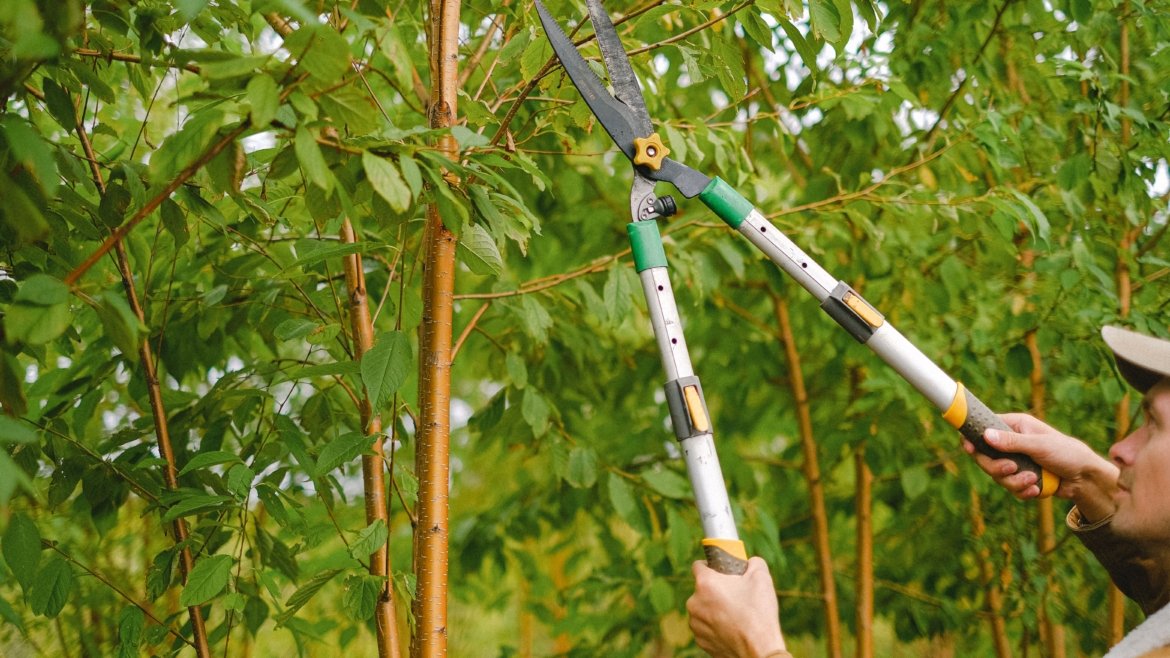
Pruning is one of the most commonly mishandled gardening tasks, simply through lack of knowledge. It’s not just “cutting off what’s extra” — pruning at the wrong time or in the wrong way can weaken a tree for years, or wipe out a shrub’s entire bloom by mistake. Here are the key principles we follow at Jardinería Palamós.
Every species has its own timing
- Deciduous trees: best in winter, while dormant — the structure is easier to see and stress is minimised.
- Spring-flowering shrubs (like forsythia): prune right after flowering, never before — pruning in winter removes the flower buds.
- Hedges: one maintenance trim in spring and another at the end of summer, avoiding the hottest hours.
- Mediterranean species (olive, laurel): tolerate pruning better at the end of winter, before the new growth starts.
The most common mistakes
- Pruning in the height of summer, when the plant is already under extra water stress.
- Poor cuts, made too close or too far from the trunk, which invite disease.
- Excessive “ball” pruning on trees that aren’t suited to that shape, weakening them over the years.
- Not disinfecting tools between plants, which can spread disease from one specimen to another.
Formative pruning vs. maintenance pruning
Formative pruning (during a plant’s early years, to give it the structure it will keep as an adult) is not the same as maintenance pruning (year after year, to preserve that shape and the plant’s health). A common mistake is treating a mature tree with formative-pruning criteria, which leads to excessive, unnecessary cuts that take the tree years to recover from.
Should you prune it yourself or hire a professional?
For low hedges and small shrubs, simple maintenance pruning can be done by the owner with the right tools (sharp, disinfected shears). But in some cases it’s best to bring in a professional:
- Tall trees, where working from a ladder or with a chainsaw carries a real fall risk.
- Branches close to power lines or the house.
- Trees showing signs of disease, where a badly done pruning job can speed up their decline.
- Major structural pruning, which shapes how the tree will grow for years to come.
Basic tools for pruning correctly
If you decide to prune small shrubs or hedges yourself, the tool matters as much as the timing. This is enough for most home gardens:
- Sharp pruning shears for thin branches — a clean cut heals far better than one crushed by a blunt tool.
- Shears or hedge trimmers for hedges and regular shapes.
- A pruning saw for thicker branches that shears can’t cut in one go.
- Alcohol or diluted bleach to disinfect tools between plants, especially if any show signs of disease.
A well-timed, well-done pruning job is one of the best investments you can make in your garden’s long-term health. If you’re not sure when or how to prune your trees or hedges, at Jardinería Palamós we’ll take a look for you. Request a free quote.